
About Daudpota Law
A legacy of knowledge, service & justice.
For more than a century, the families from which Daudpota Law springs have contributed to Pakistan through scholarship, military honour, institution-building, and an enduring commitment to justice.
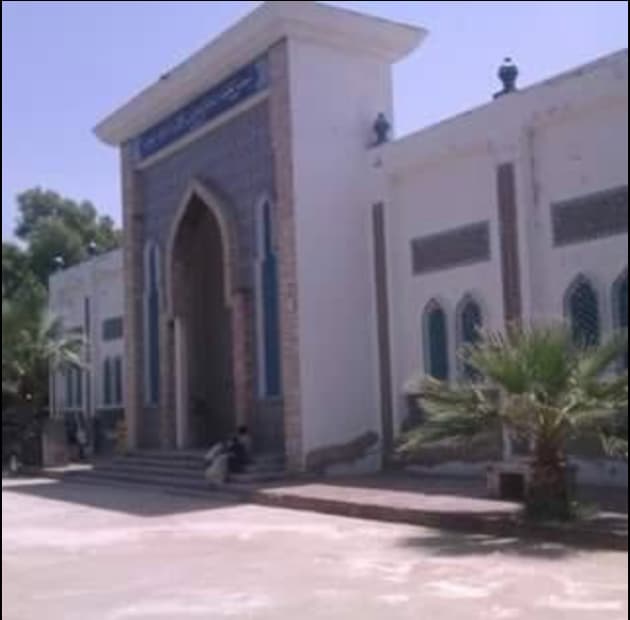
Our story
The Daudpota name.
The name Daudpota has been woven into the fabric of Pakistan’s intellectual, military, and legal history for over a century.
The Daudpotas, literally “Sons of Daud”, are one of Sindh’s oldest and most storied clans, tracing their lineage to Arab ancestry and the Abbasid line descending from Hazrat Abbas (R.A.), paternal uncle and companion of the Prophet Muhammad (S.A.W.). Their ancestors arrived in Sindh from Egypt in 1366 CE under the leadership of Ameer Sultan Ahmad Abbasi II, settling along the Indus and gradually becoming one of the most influential presences in lower Sindh.
By the 17th century, the Daudpotas had founded the city of Shikarpur, today one of Sindh’s great historic urban centres, and the Nawabs of Bahawalpur themselves belonged to this clan. Over the centuries, different branches of the family distinguished themselves through scholarship, military honour, and civic leadership. The branch from Talti, District Dadu, produced Shams-ul-Ulama Dr. Umar Bin Muhammad Daudpota, and through him, a lineage of service to Pakistan that continues at this firm today.
Scholarship
Courage
Justice
Institution-building
A standard to be met
Four lives. One enduring legacy.
Across scholarship, aviation, the judiciary, and education, these lives share a belief that knowledge and service are foundations, not ornaments.
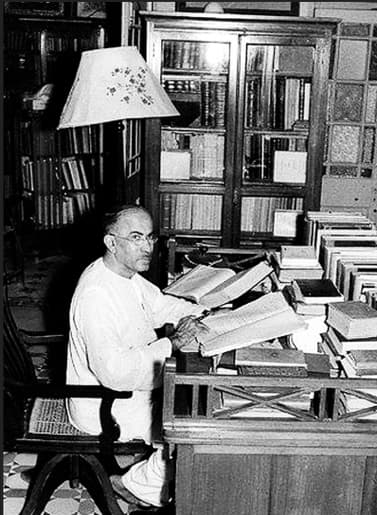
The foundation of knowledge
Shams-ul-Ulama Dr. Umar Bin Muhammad Daudpota
1896, 1958Born in the village of Talti in Sindh, Dr. Umar Bin Muhammad Daudpota rose from modest beginnings to become one of the most celebrated scholars the subcontinent has ever produced. After topping the matriculation examinations at Sindh Madrasat-ul-Islam in Karachi, he went on to earn a doctorate from Cambridge University, among the first Sindhi scholars ever to do so.
In recognition of his extraordinary contributions to Arabic literature, linguistics, history, and education, the British Crown conferred upon him the title of Shams-ul-Ulama, Sun of the Scholars, one of the highest intellectual honours of the era.
A master of English, Arabic, Persian, and Sindhi, Dr. Daudpota authored and edited over two dozen works spanning history, poetry, religion, and linguistics. His career in public service was equally distinguished: he served as Principal of Sindh Madrasat-ul-Islam, Professor of Arabic at Ismail Yusuf College in Bombay, and Director of Public Instructions in Sindh. He was also a member of the Pakistan Public Service Commission.
Upon his passing, his family donated his vast personal collection to what became the Shamsul Ulema Daudpota Public Library in Hyderabad, a treasury of nearly 100,000 volumes that continues to serve scholars to this day.
Dr. Daudpota is listed in the proud Roll of Honour of Sindh Madressatul Islam alongside the nation’s greatest educationists and men of letters.

The courage of a nation
Air Marshal Mohammed Azim Daudpota, H.I.(M), S.J., S.I.(M)
1933, 2017Son of Shams-ul-Ulama, Air Marshal Azim Daudpota embodied a different kind of service, one written in the skies above a young nation at war.
Trained at the Royal Australian Air Force Academy, he distinguished himself as an F-86F fighter pilot during the 1965 War with India, engaging enemy positions at the Wagah-Attari border with exemplary courage. For his battlefield valour, he was awarded the Sitara-e-Jurat (Star of Courage), Pakistan’s third highest military honour.
His career reached extraordinary heights across three continents. In 1983, Pakistan sent him to Zimbabwe to lead an entire air force. He served as Chief of Air Staff of the Air Force of Zimbabwe from 1983 to 1986, for which the Government of Zimbabwe awarded him its Order of Merit. Upon returning to Pakistan, he was appointed Managing Director and later Chairman of Pakistan International Airlines (1986, 1990). In 1999, he was sworn in as Governor of Sindh, completing a life of service spanning warfare, diplomacy, state enterprise, and provincial governance.
“As a courageous pilot, a sincere professional and a patriotic Pakistani, Azim Daudpota served as a model and inspiration.”, Air Chief Marshal Sohail Aman
Hilal-e-Imtiaz (Military) · Sitara-e-Jurat · Sitara-e-Imtiaz (Military) · Tamgha-e-Diffa · Sitara-e-Harb 1965 · Tamgha-e-Jang 1965 · Tamgha-e-Jang 1971 · Tamgha-e-Sad Saala Jashan-e-Wiladat-e-Quaid-e-Azam · Tamgha-e-Jamhuria (1956) · India Service Medal (1939, 45) · Queen Elizabeth II Coronation Medal (1953) · Order of Merit, Zimbabwe.
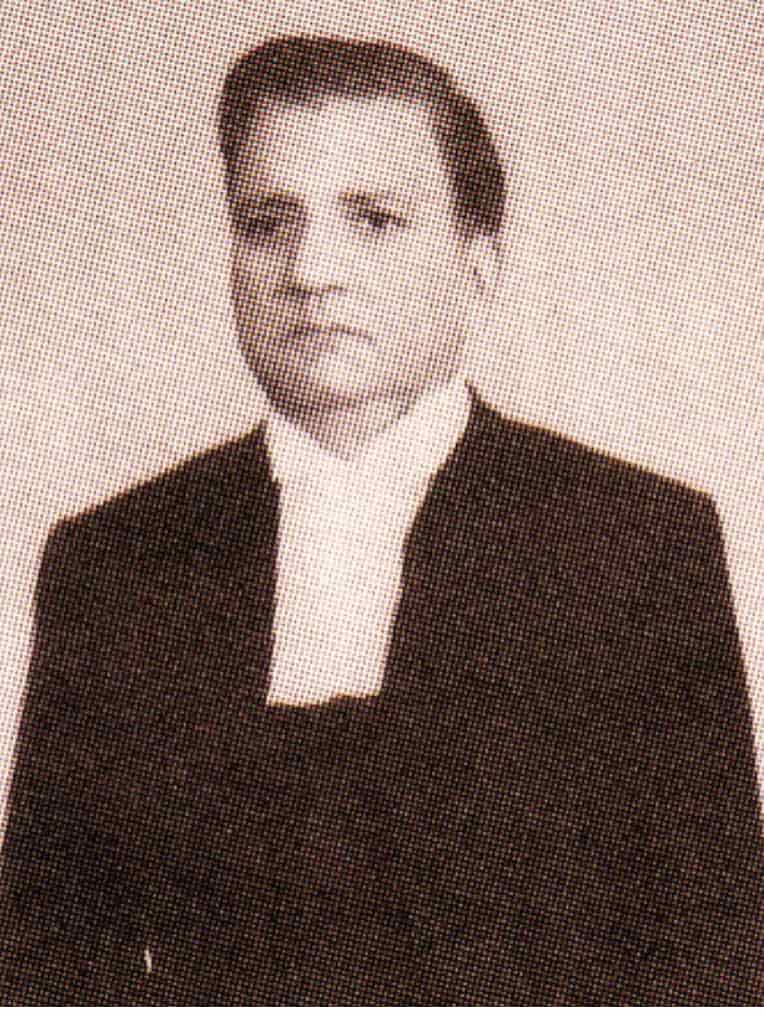
The pillars of justice
Justice Mushtak Ali Kazi
1917, 2002On the maternal side, the family of Justice Mushtak Ali Kazi represents a dynasty of public servants whose contribution to Pakistan’s legal and civil institutions spans generations.
Born in Sindh on 21 December 1917 and educated at the University of Bombay, Justice Kazi served the bench with distinction across the most consequential courts in the country. After years as a District and Sessions Judge across Sindh, he was appointed Joint Secretary at the Ministry of Law, Government of Pakistan, before being elevated to the bench as a Judge of the High Court of Sindh and Balochistan.
During the turbulent political climate of the early 1970s, he presided over the Hyderabad Tribunal, a high-profile proceeding involving prominent national figures. Following his retirement from the High Court, Justice Kazi served as Chairman of both the Sindh Services Tribunal and the Sindh Public Service Commission.
His family is among the most distinguished in Sindh’s judicial history. His nephew Justice Mamoon Kazi rose to serve as Chief Justice of the High Court of Sindh. The wider Kazi family has included Justice Mohammed Hayat Junejo, Justice Imam Ali G. Kazi, Justice Akhter Ali G. Kazi, and Justice Mukhtiar Ahmad Junejo, names that have shaped Pakistan’s legal institutions across decades.
Justice Mushtak Ali Kazi was married to Razia Effendi, granddaughter of Khan Bahadur Hassanally Effendi, which brings us to one more name without which this legacy would be incomplete.
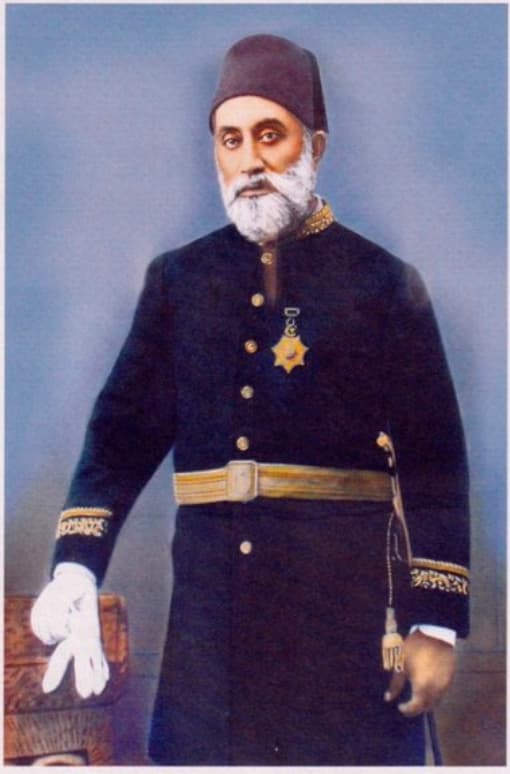
The visionary behind it all
Khan Bahadur Hassanally Effendi
1830, 1895Born in Hyderabad in 1830, Khan Bahadur Hassanally Effendi dedicated his life to a single conviction: that the Muslims of Sindh could only reclaim their rightful place in the world through modern education.
In 1885, inspired by Sir Syed Ahmed Khan of Aligarh and supported by Justice Syed Amir Ali of Calcutta, he founded Sindh Madressatul Islam in Karachi, the institution that would go on to educate the Father of the Nation, Quaid-e-Azam Muhammad Ali Jinnah, along with generations of Pakistan’s greatest leaders, lawyers, soldiers, and scholars.
It was also the institution where Dr. Umar Bin Muhammad Daudpota first distinguished himself academically, connecting two branches of this legacy through one building and one man’s vision.
Recognised in Pakistan Post’s Pioneers of Freedom stamp series, Effendi’s institution today stands as Sindh Madressatul Islam University, a monument to his foresight, more than 140 years on.
What we carry forward
The legacy lives in the work.
The scholars, soldiers, judges, and institution-builders who came before us believed that knowledge, integrity, and service are foundational virtues.
At Daudpota Law, we invoke this heritage as a standard to be met, in the rigour of our legal counsel, the integrity of our advice, and the depth of our commitment to every client who places their trust in us.
We carry it forward, one matter at a time.